Some links in this newsletter may be affiliate links. As a member of the eBay Partner Network, I may earn a commission from qualifying purchases.
🏈 Where Did All These 1960 Fleer Football Proofs Come From?
I ran across this interesting 1960 Fleer Football 11-card uncut strip on eBay the other day, featuring Sammy Baugh, Hank Stram, and Paul Maguire. At first, I thought the yellow-dominant progressive proof was a fairly unique piece of Fleer production material.
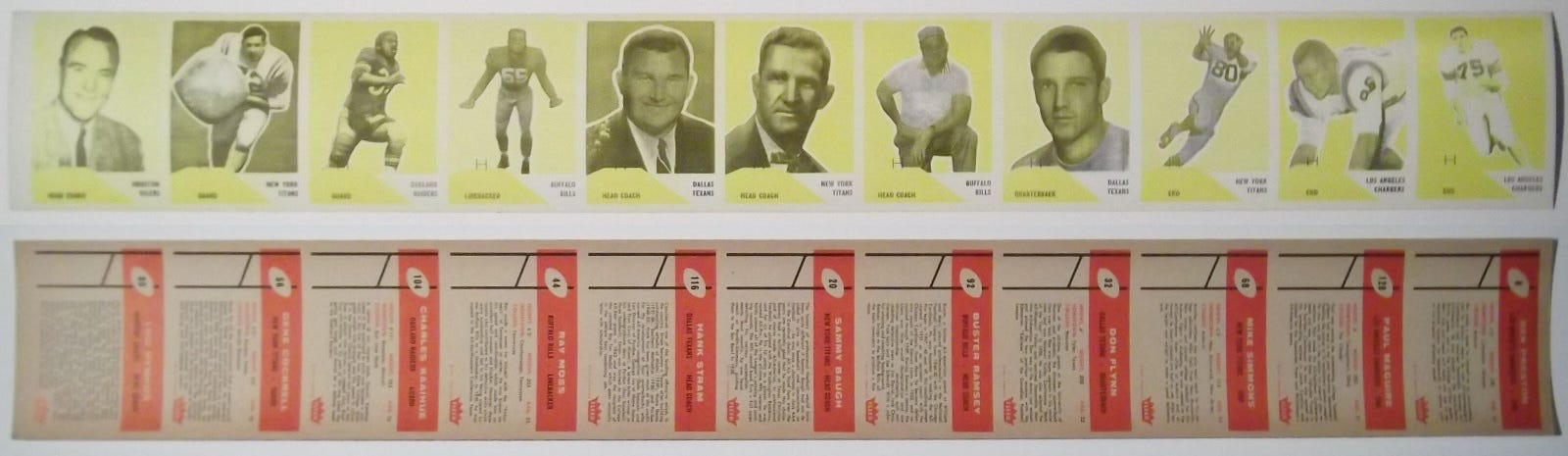
But after digging around a little, it turns out there’s a TON of this stuff out there!
Beyond this particular strip on eBay, I found several other uncut strips, an SGC-graded George Blanda proof (eBay link), individual Sammy Baugh examples, both a raw yellow one (eBay link) and graded (eBay link), and hundreds of other proofs and color separations from the set (eBay link).
Apparently, this isn’t a recent discovery, either. Heritage sold a trio of Mel Branch progressive proofs back in November 2010 for $179.25 and REA has also sold dozens of uncut sheets and a hoard of 900 proofs over the years.
Beckett’s description of the 1960 Fleer Football set specifically notes that large quantities of color separations and proofs are widely available. But I haven’t found anything explaining when, how, or where all this production material entered the hobby.
Does anyone know where it all came from?
📸 The Original Charles Conlon Photograph Behind Buck Weaver’s W514 Card
Here’s a cool example of an original photograph used to create a baseball card, courtesy of Scott Stuber, who pointed it out on X.
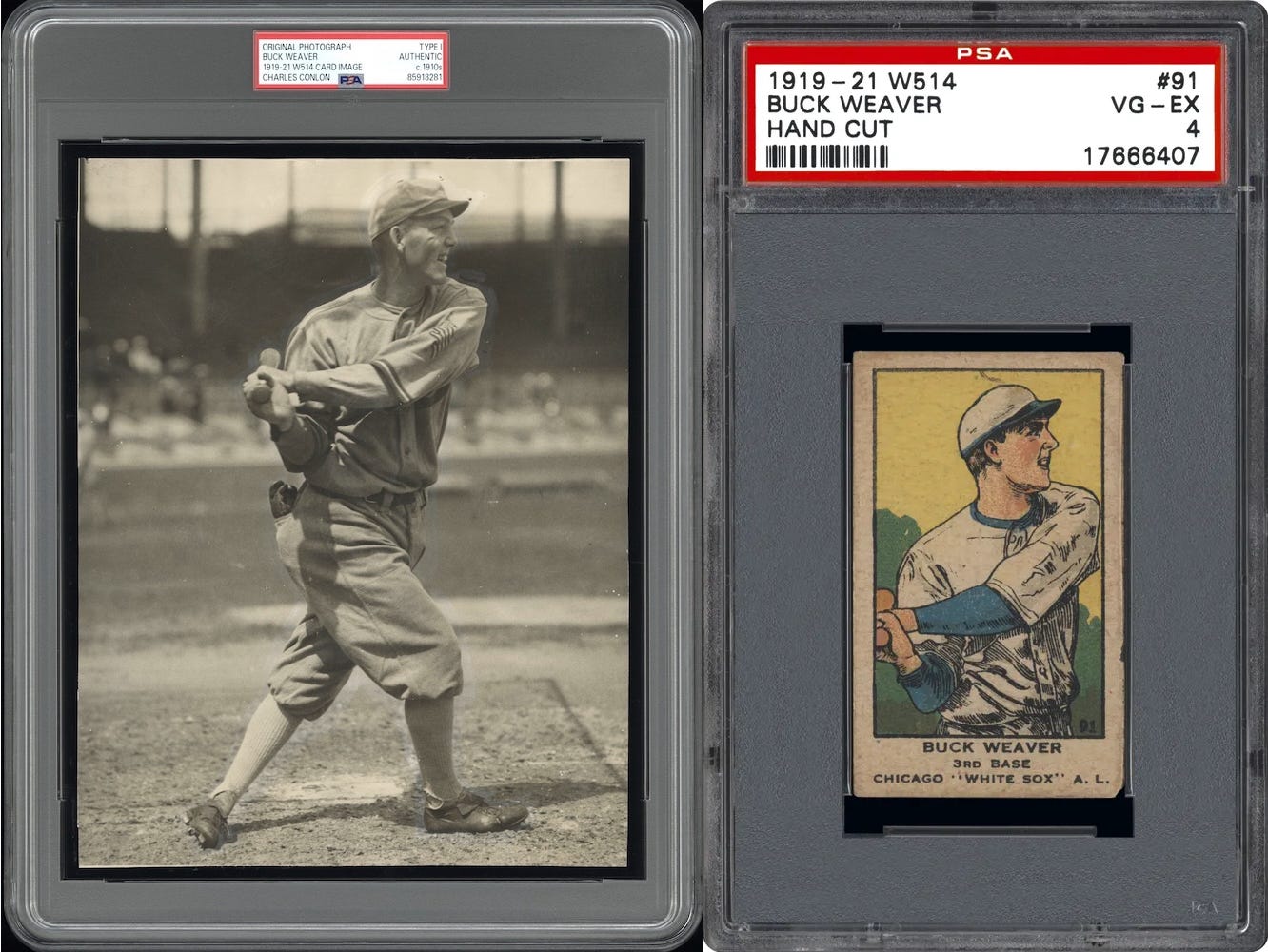
It’s a PSA-authenticated Type I photograph of Buck Weaver, taken by legendary baseball photographer Charles Conlon, that served as the basis for Weaver’s #91 card in the 1919–21 W514 strip card set that’s available on eBay right now.
Conlon was one of baseball’s most important early photographers (perhaps most famously known for his “sliding into base” photo of Ty Cobb), capturing thousands of images of major leaguers during the first half of the 20th century. His work appeared in newspapers, magazines, and on baseball cards, and his extensive photographic archive remains an invaluable record of the game’s early history.
What’s particularly neat about this example is how closely the card’s illustration follows Conlon’s photograph.
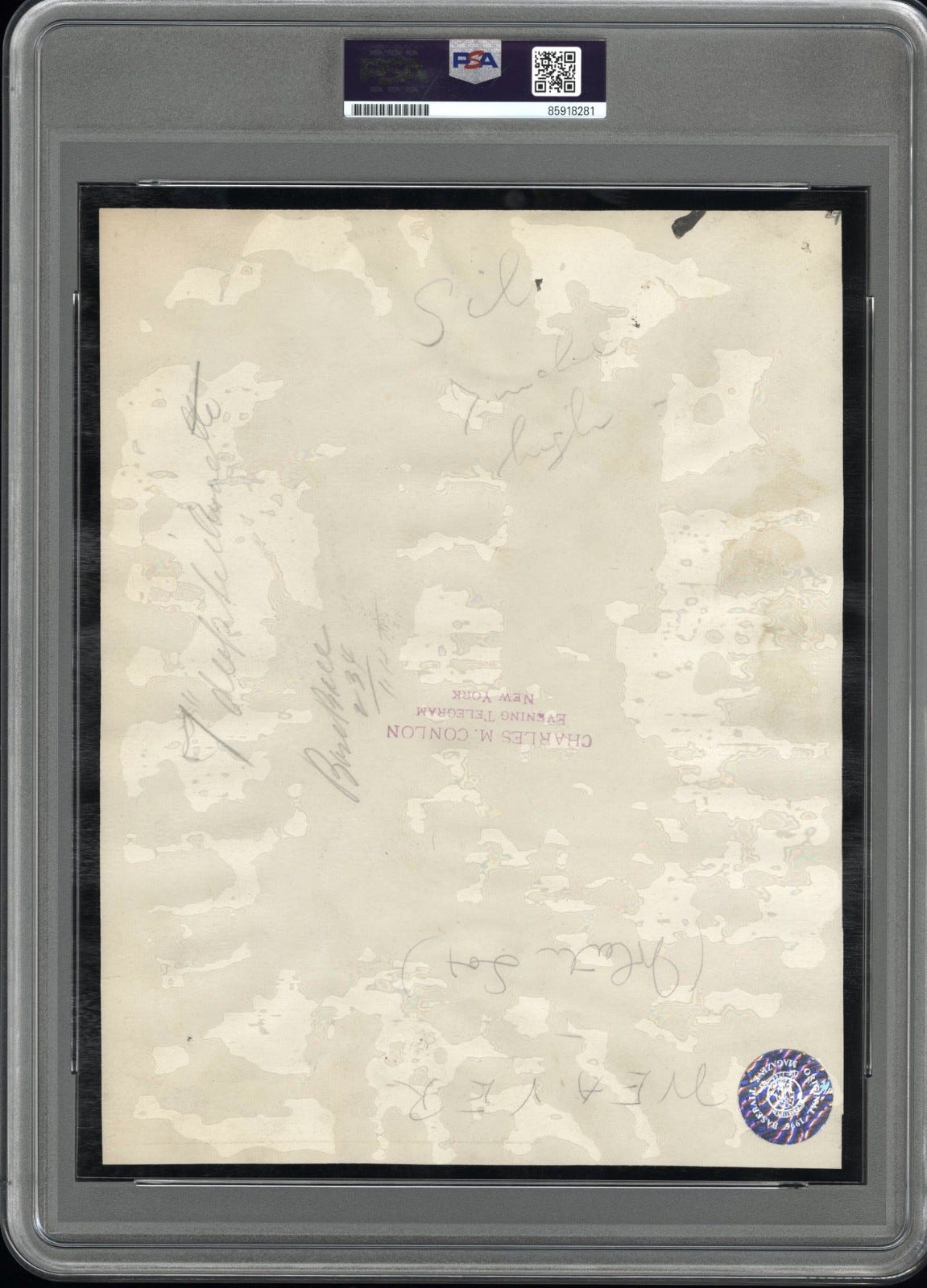
The back of the photograph also bears Conlon’s Evening Telegram stamp and several handwritten notations.